
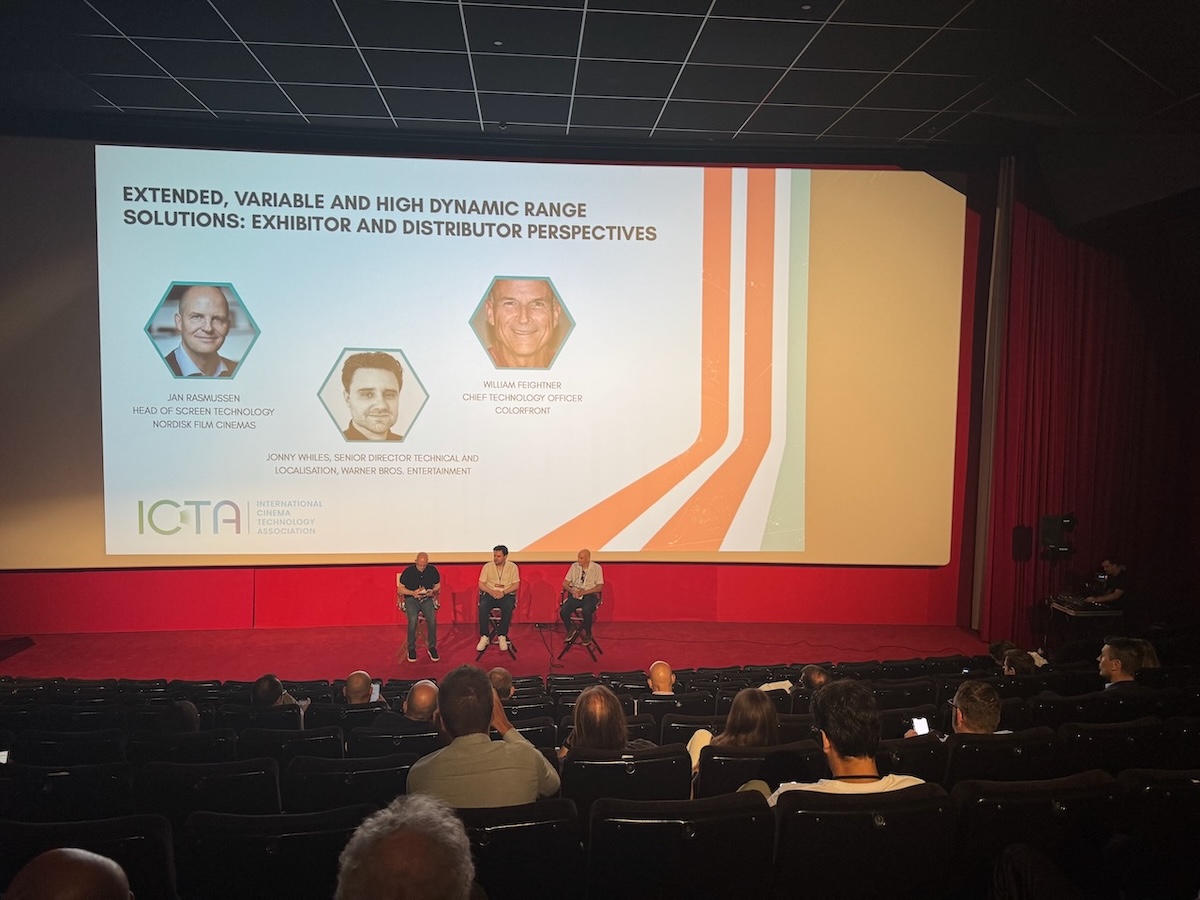
Colorfront participated in the ICTA Barcelona Cinema Technology Summit on Sunday, June 15, 2025. Held at The Phenomena Experience, the event featured a panel discussion titled “Extended, Variable and High Dynamic Range Solutions: Exhibitor and Distributor Perspectives.”
Panelists:
• Jan Rasmussen – Head of Screen Technology, Nordisk Film Cinemas
• William Feightner – CTO, Colorfront
• Jonny Whiles – Senior Director, Technical and Localization, Warner Bros. Entertainment
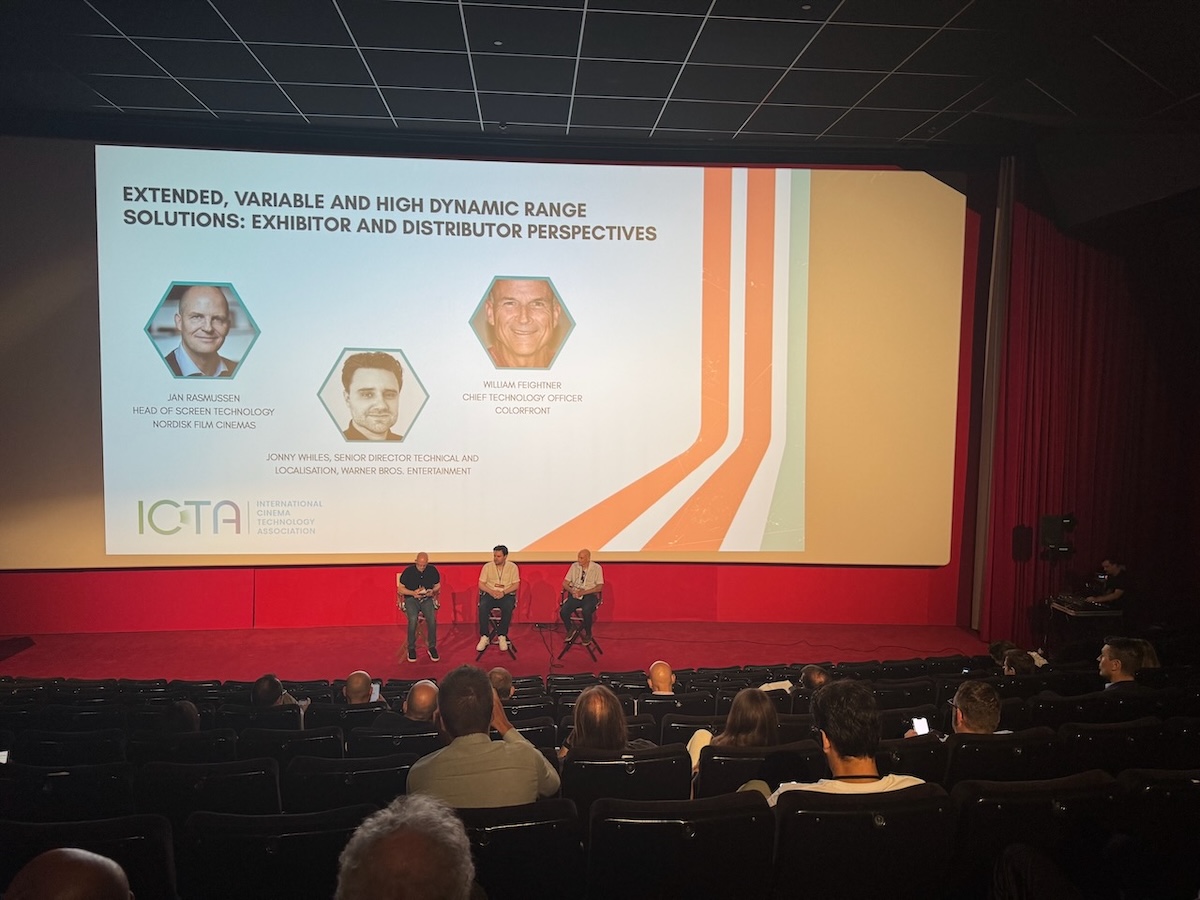
Bill Feightner's perspective:
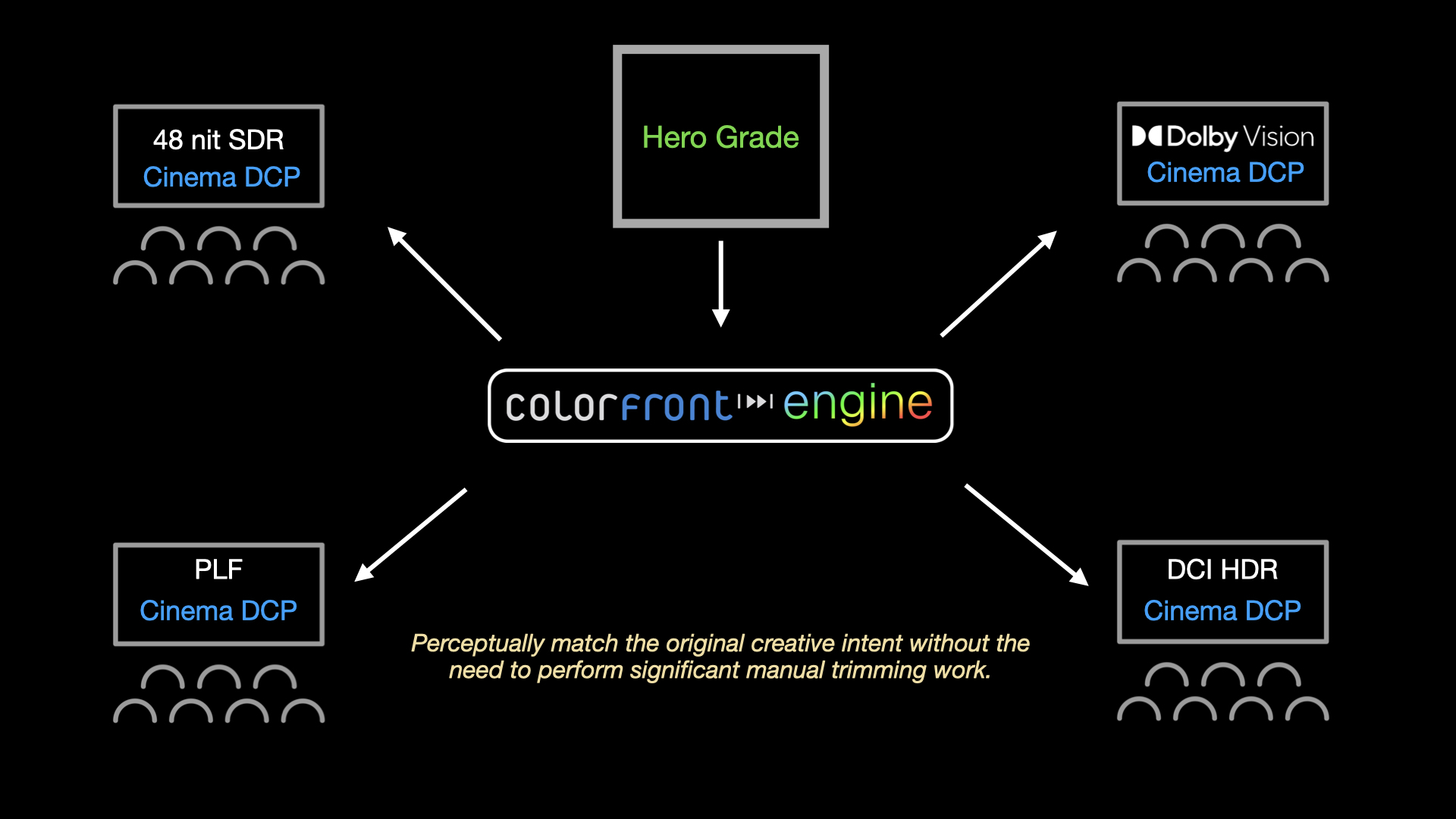
...well, on the post-production side, it's obvious from everything that's been discussed that we've got a lot of versions we need to create. There are traditional ways—especially with some proprietary formats—where you have to deliver separate grades, or spend a lot of manual time trying to trim and finalize on particular screens. Practically speaking, post facilities can't maintain every solution out there. Right now, you'd potentially have Barco Light Steering, Christie VDR, Dolby Vision, and LED direct-view systems—multiple HDR display technologies.
The approach we’ve taken at Colorfront is to automate this process. It's about managing light and how to preserve the filmmaker's creative intent across different displays and dynamic ranges.
We've developed a perceptual processing model based on how human vision works. This ensures that when content is mapped to different dynamic ranges—whether SDR, EDR, or HDR—we retain the artistic choices made during mastering.
For soft-proofing in post, it's essential to work in a mastering environment that can simulate a wide range of projection systems. If you're able to reproduce the largest color volume and dynamic range required, you can reduce the number of trim passes and avoid creating separate versions manually.
We've seen excellent results using our tech to create Dolby Cinema masters from SDR sources. The process typically requires little or no manual tweaking, and it's a major time saver.
“Looking forward, there will come a point when we have technology in cinemas themselves that can locally render the content according to the specific display’s capabilities—similar to what’s currently done with immersive audio systems like Dolby Atmos.”
William Feightner, CTO, Colorfront

Future cinema systems may adapt content in real time based on ambient light or screen capability. That means a dinner theater could display content differently from a dark auditorium, while maintaining perceptual consistency.
HDR isn’t about brightness alone. An HDR-capable projector can faithfully match SDR if needed. The power of HDR lies in its expanded creative palette, particularly in color, shadows, and highlights.
Perceptually driven automation is the most realistic path forward. Grading tools were built for creative intent—not complex color remapping. Colorfront’s tools handle the rest, allowing creatives to stay focused on vision while we manage delivery consistency.
The combination of automated workflows and local rendering will reduce the burden of HDR versioning and ensure that the filmmaker’s vision reaches every screen accurately.
Visit engine.colorfront.cloud for more information.